


What is a Plastic Extruder and How Does it Work for You?
Millions of plastic components are produced every year, and demand keeps rising as polymers continue to improve in performance, appearance, and cost efficiency. There are many ways to manufacture plastic parts, but one of the most widely used methods is extrusion—especially when you need long, continuous output that can be cut, formed, or assembled into a finished product.
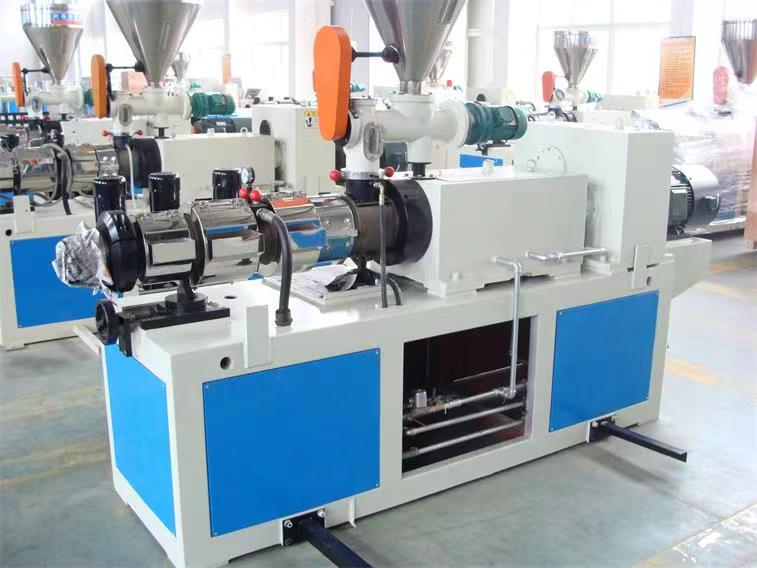
The backbone of that process is the extruder itself. If you’ve ever asked what is an extruder or wondered how it fits into your project timeline and quality targets, you’re not alone. From material selection to stable production, the extruder and the tooling around it are what turn a design into repeatable output.
HZH works with customers who need dependable extrusion results and the tooling expertise that makes them possible. Below, we break down the essentials: what the machine is, how it operates, where quality is won or lost, and which products are commonly made on an extrusion line.
The Ins and Outs of a Plastic Extruder
So, what is a plastic extruder in practical terms? It’s a production machine that melts plastic pellets (or granules), pressurizes the melt, and pushes it forward continuously into a die that forms a specific cross-section. The result is a steady profile that can be cooled and cut to length.
While the equipment is powerful, consistency comes from the people running it and the discipline behind setup and maintenance. A trained plastic extruder operator watches temperatures, pressures, screw behavior, and downstream sizing to keep the line stable and the output within tolerance.
Extrusion lines are often described as complete systems rather than single machines. In real production, the extruder, die, cooling, puller, and cutting stations work together as integrated plastic extrusion equipment.
When you’re comparing suppliers, ask how they control melt stability and dimensional repeatability—not just what the machine “can do” on paper.
Extruder Screw
The screw is the engine of the extruder. It rotates inside the heated barrel, moving material forward while also mixing, compressing, and helping melt the polymer evenly. Industrial screws come in many diameters and designs, and the “right” one depends on the material and output goals.
In day-to-day production, screw design influences melt uniformity, pressure stability, and throughput—three factors that directly affect surface finish and dimensional control. When output is inconsistent, the screw and its wear condition are often part of the investigation.
Cooling Mechanisms
Cooling is where the soft, hot profile becomes a stable product. Some lines use air cooling, while others rely on water tanks, sprays, or vacuum calibration tables. The best method depends on geometry, wall thickness, polymer type, and the tolerance window you need to hold.
Cooling also affects internal stress. If cooling is too aggressive or uneven, profiles can warp, twist, or show shrink-related distortion later. That’s why cooling design is not just “after the fact”—it’s part of the process strategy.
Metal Die
The die is the shaping tool that creates the cross-section you designed. It’s typically machined from durable metal and finished to support smooth flow and a clean surface. Even minor geometry differences inside the die can change how material distributes across the profile.
For multi-material profiles, internal flow management becomes even more critical. Properly designed tooling helps materials meet at the right location, bond correctly, and maintain the intended layers without one layer overpowering the other.
How Does a Plastic Extruder Work?
If your team is asking, how does extruder work from start to finish, it helps to think of extrusion as a controlled sequence: feed the polymer, melt it consistently, clean it, shape it, stabilize it, and then convert it into finished lengths or downstream assemblies.
The extruder itself doesn’t choose your material or redesign your part, but a strong extrusion partner will often flag constraints early—like thin walls, sharp corners, or tight tolerance zones that may require tooling adjustments or different cooling strategies.
Feeding & Melting
The cycle begins with pellets or granules fed into a hopper. From there, the material enters the barrel, where the rotating screw moves it forward. Heat from barrel zones, combined with shear from screw rotation, brings the polymer to a workable melt state.
In many plants, a profile extruder is tuned to keep melt temperature stable and predictable because profile geometry can be unforgiving. A few degrees of variation can translate into visible surface changes or dimensional drift downstream.
Filtering
Before the melt reaches the die, it often passes through a screen pack and a breaker plate. This step helps catch contaminants and improves melt uniformity. While filtration practices vary by manufacturer and application, it’s widely used as an in-process quality safeguard.
Filtering can also protect the die from damage and reduce surface defects—especially important for parts where appearance matters.
Shaping
Next comes the shaping stage: molten polymer flows into the die, taking on the die’s geometry as it exits. This is where tooling precision shows up in real time—sharp detail, even wall thickness, and stable dimensions are all tied to die design and flow balance.
Cooling & Sizing
As the profile exits the die, it must be cooled and sized to hold shape. Many lines use cooling tanks or calibration systems to stabilize the profile, relieve internal stress, and lock in key dimensions. Puller speed and cooling intensity are adjusted together to keep output consistent.
For tight-tolerance parts, sizing isn’t optional—it’s the difference between a profile that assembles smoothly and one that causes rework.
Cutting & Finishing
Finally, the continuous extrudate is cut to specified lengths. Depending on the polymer and the end-use, secondary operations may follow, including drilling, punching, thermoforming, assembly, bonding, or ultrasonic welding.
Many customers treat finishing as a separate project phase, but it’s often smarter to consider it early. The way a part is cut, stacked, and handled can affect edge quality, straightness, and cosmetic appearance.
Common Products Made by a Plastic Extruder
Plastic extrusion supports a wide range of industries—from construction and appliance manufacturing to lighting, furniture, and industrial components. Because extrusion creates continuous output efficiently, it’s a go-to option for products that need consistent cross-sections at scale.
Common examples include:
Tubes
Pipes
Plastic sheets and film
Weatherstripping and sealing profiles
Window and door frame components
Wire and cable insulation coatings
HZH: Experts in Plastic Extruders and Extrusion Services
HZH is a well-known Chinese manufacturer supporting extrusion projects with strong tooling and production capabilities. As one of the experienced extrusion die Manufacturers in China, HZH focuses on the practical details that help extrusion lines run reliably: balanced flow, durable die construction, and process-friendly designs that make it easier to hold dimensions over long runs.
Customers typically come to HZH for one of two reasons: they’re building a new profile and want fewer surprises during ramp-up, or they’re trying to improve an existing profile by tightening tolerances, increasing throughput, or stabilizing appearance. In both cases, results come from aligning part requirements with die design, line settings, and downstream sizing.
If you’re evaluating an extrusion program, HZH can support your next step—whether that’s reviewing a drawing, discussing material behavior, or planning tooling that matches the output and quality targets your market expects.
Summary
A plastic extruder is more than a melting machine—it’s a complete production system that turns pellets into consistent, cut-to-length profiles. Output quality depends on stable melting and pressure, smart filtration, precise die shaping, and disciplined cooling and sizing.
When you pair the right equipment setup with the right tooling partner, extrusion becomes a predictable way to produce high-volume profiles with repeatable dimensions and clean surfaces. HZH brings that tooling focus to the table, helping customers move from concept to production with fewer defects, less scrap, and better day-to-day process stability.
FAQ
Do I need a custom die for every profile?
In most cases, yes. The die defines the cross-section, so a new profile typically requires custom tooling. Minor variations may be possible through die adjustments, but meaningful geometry changes usually need a new or modified die.
What causes surface lines or roughness on extruded parts?
Common causes include unstable melt temperature, contamination, worn screw or die surfaces, poor filtration, or cooling that’s too aggressive. A structured review of process settings and tooling condition is usually the fastest path to correction.
How can I improve dimensional stability over long production runs?
Start by stabilizing melt temperature and pressure, then verify cooling and sizing consistency. Tooling wear (especially at the die exit) and puller speed fluctuations are also frequent contributors to drift.
Can extrusion handle tight tolerances?
Yes, but it requires the right combination of die design, calibration/sizing strategy, temperature control, and disciplined process monitoring. Tolerance goals should be discussed early so the tooling and downstream setup can be planned accordingly.